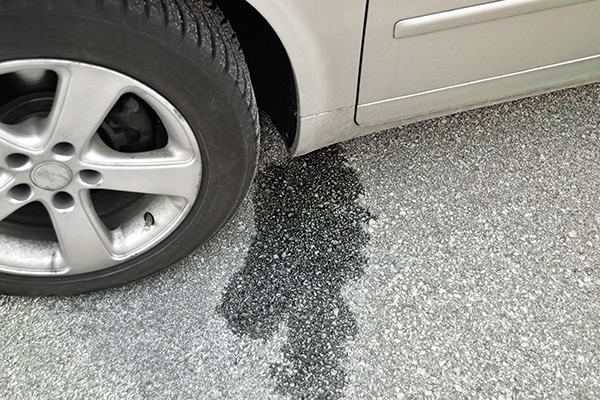
Coolant usually does not vanish overnight. More often, the level drops slowly until you suddenly realize you’ve topped it off three times in a month. The tricky part is that many coolant leaks never leave a puddle, so drivers assume nothing is wrong.
A quick inspection can catch these early before the system runs low and starts overheating on a hot day or in stop-and-go traffic.
1. Radiator Cap And Overflow Hose Seepage
The radiator cap does more than keep coolant in. It holds pressure, and pressure raises the boiling point so the system can handle heat. If the cap seal is weak or the neck is slightly corroded, coolant can vent as vapor and you may never see it drip.
The overflow hose and the connection at the reservoir can also seep, especially as plastic and rubber age. Look for crusty residue around the cap area, the reservoir seam, or the hose connection. That dried residue is often the only clue that a small loss has been happening for a while.
2. Water Pump Weep Hole Drips That Evaporate
Many water pumps have a small weep hole designed to show early seal failure. When the internal seal starts going, a small amount of coolant can leak out and run down the front of the engine. Because it’s near hot parts, it may evaporate before it ever hits the ground.
A faint sweet smell after parking, or a light crusty trail near the pump area, can be the giveaway. We see this most when the leak is small enough to be ignored for weeks, then it suddenly gets worse and the coolant level drops fast. Catching it early usually keeps the repair simpler.
3. Heater Core Seepage Inside The Cabin
Not all coolant leaks happen outside the car. A heater core leak can drip inside the HVAC case and never show up under the hood. Sometimes the only clues are foggy windows that are hard to clear, a sweet smell inside the cabin, or damp carpet on the passenger side.
Drivers often blame weather or a windshield seal, but coolant has a distinct scent and leaves a slightly slick feel when it’s fresh. If your heater output also seems inconsistent, that can be tied to low coolant from a leak you can’t see. This is one of those spots that can go unnoticed until the smell becomes obvious.
4. Thermostat Housing And Coolant Outlet Seals
Thermostat housings and coolant outlets are common leak points because they sit at the front of the engine and deal with constant heat cycling. Many modern engines use plastic housings or multiple O-rings, and those seals can flatten or crack with age. When that happens, the leak may only show up when the system is hot and pressurized.
You might see a crusty line where the coolant dried, or a slightly wet area that collects dust into a sticky grime. If the temperature gauge occasionally creeps up in traffic, a small housing seep can be part of the story. It’s also easy to mistake it for a different leak because coolant can run along the engine and drip far from the source.
5. Small Hoses, Clamps, And Hidden Junctions
The cooling system has more hoses and junctions than most people realize. Small bypass hoses, heater hoses at the firewall, and plastic T-fittings can seep slowly without ever dripping onto the driveway. A clamp that has lost tension can let coolant mist out under pressure, then dry before you spot anything.
This is where regular maintenance really helps because checking hose softness, clamp condition, and hose routing often prevents a small seep from turning into a burst hose. If you’re topping off coolant but everything looks dry, the leak may be tucked behind a splash shield or hidden under an intake duct. The right check is to look for residue trails and pressure-test the system so the leak shows itself.
Get Coolant Leak Repair In Hanover Park, IL, With Kamphaus Auto Care
If you’re topping off coolant or you’ve noticed a sweet smell with no obvious puddle, the next step is to book service so the leak can be found and repaired before the system runs low.
Schedule service with Kamphaus Auto Care in Hanover Park, IL, to keep the cooling system sealed, protect the engine from overheating, and avoid a breakdown that starts with a small leak.