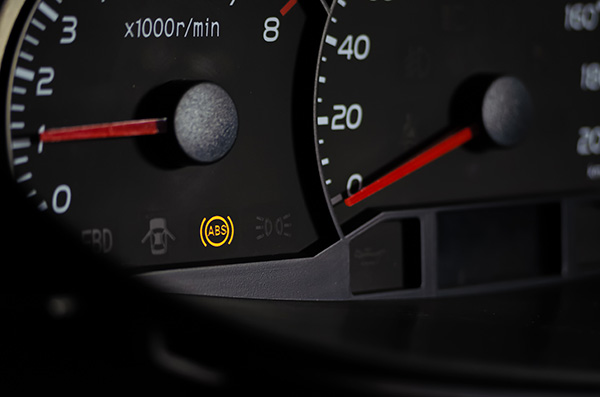
Two warning lights at once can make the problem look bigger than it really is. The ABS light comes on, the traction control light follows, and the car may still brake and drive normally.
It feels confusing because those systems sound separate.
In many vehicles, ABS and traction control use the same wheel speed information. If one wheel speed sensor stops sending a clean signal, both systems may lose the data they need. One minor sensor issue can trigger multiple warnings on the dashboard.
What A Wheel Speed Sensor Does
A wheel speed sensor measures how fast each wheel is turning. The vehicle uses that information for anti-lock braking, traction control, stability control, and sometimes transmission or all-wheel-drive behavior.
ABS uses wheel speed data during hard braking. If one wheel starts to lock up, the system can adjust brake pressure to help the tire keep grip. Traction control uses similar data in the opposite situation. If one wheel spins faster than the others during acceleration, the system can reduce power or apply braking to help regain traction.
Both systems require accurate wheel-speed readings. If one sensor drops out, sends a weak signal, or reports something that does not match the other wheels, the computer may turn off ABS and traction control until the problem is fixed.
Why Both Lights Can Come On Together
The ABS light does not always mean the brakes are mechanically failing. It means the anti-lock braking system has detected a fault. The traction control light can come on at the same time because traction control depends on the same sensor data.
For example, if the left front wheel speed sensor stops reporting, the ABS module may not know whether that wheel is locking during braking. The traction control system may also be unable to tell whether that wheel is slipping during acceleration.
Instead of making a bad decision with missing data, the vehicle warns the driver and disables part of the system. The regular brakes may still work, but the extra safety features may not be available when you need them.
What Causes A Wheel Speed Sensor To Fail
Wheel speed sensors live in a rough location. They sit near the wheels, where they deal with water, road salt, dirt, heat, vibration, and debris. Over time, the sensor can fail internally, become covered in grime, or lose signal due to nearby damage.
Wiring is just as important as the sensor itself. A cracked wire, loose connector, corrosion, or rubbed-through insulation can interrupt the signal. Sometimes the warning appears only after a bump, during wet weather, or once the vehicle has been driven for a few minutes.
A bad sensor is common, but it should not be assumed. The sensor, wiring, connector, hub, and tone ring all need to be checked before parts are replaced.
Other Problems Can Look Like A Bad Sensor
Some vehicles read wheel speed through a tone ring or magnetic encoder built into the wheel bearing or hub. If that ring is cracked, rusty, dirty, or damaged, the sensor may send incorrect readings even though the sensor itself is still working.
A worn wheel bearing can create similar symptoms. If the bearing has play or internal wear, the sensor signal may become unstable. Drivers may also hear a humming or growling noise that changes with speed.
Tire problems can add confusion, too. A mismatched tire size, low tire pressure, uneven tread, or a badly worn tire can cause wheel speed readings to differ from the others. Regular maintenance should include tire pressure and tread checks, as these simple items can affect more systems than drivers expect.
Can You Keep Driving?
If only the ABS and traction control lights are on and the brake pedal feels normal, the car may still be operating on standard braking. The difference is that anti-lock braking and traction control may not help during a hard stop, slippery turn, or wet-road acceleration.
That matters more in rain, snow, gravel, or emergency braking. You may not notice the missing assistance during normal driving, but the system may not respond the way it should when road conditions change.
If the red brake warning light comes on, or the pedal feels soft, low, or different, do not treat it as a simple sensor issue. Brake fluid, hydraulic pressure, or another brake system problem may be involved.
How The Problem Is Found
A proper inspection starts by reading the stored codes from the ABS. The code may identify which wheel or circuit is causing trouble. From there, the technician can check live wheel speed data, wiring condition, connector fit, sensor condition, hub condition, and battery voltage.
Low voltage can also trigger multiple warning lights. A weak battery, failing alternator, or poor ground can make electronic systems act strangely. That is why testing the electrical foundation sometimes matters before replacing ABS parts.
The goal is to confirm whether the vehicle has a bad wheel speed sensor, damaged wiring, a hub issue, a tire-related problem, or a deeper ABS concern.
Get ABS And Traction Control Service In Hanover Park, IL, With Kamphaus Auto Care
If your ABS light, traction control light, or stability warning is on, Kamphaus Auto Care in Hanover Park, IL, can test the wheel speed sensors, wiring, hubs, tires, and brake system to find the cause.
Schedule a visit and get the warning checked before you need ABS or traction control on a slick road.