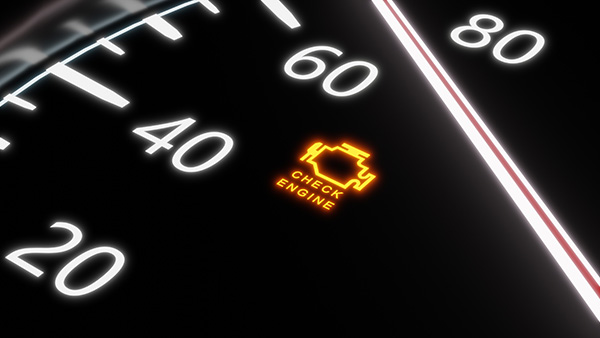
A flashing check engine light can change the situation fast. A steady light gives you some time to plan your next step, but a flashing light is different because the car is telling you the problem is active right now, not just stored in memory for later.
That warning should be treated as urgent.
Why A Flashing Light Is More Serious Than A Steady One
A flashing check engine light usually means the engine is misfiring badly enough to threaten the catalytic converter. When a cylinder misfires, the fuel is not burning as it should inside the engine. Instead, some of that raw fuel enters the exhaust, where it can overheat the catalytic converter and damage it quickly.
That is why the light flashes instead of staying on steadily. The car is not giving you a mild reminder. It is warning you that continued driving can turn one repair into several.
What Causes A Flashing Check Engine Light Most Often
In most cases, the cause is an active misfire. Spark plugs, ignition coils, fuel delivery issues, injector trouble, or a more serious internal engine problem can all trigger it. Some misfires become much more severe under load, which is why drivers notice them during acceleration, on the highway, or while climbing a hill.
This is one reason the car can feel worse very suddenly. A minor ignition part or fuel problem can go from barely noticeable to serious fast once the engine is under stress. During regular maintenance, many of these issues are found before they reach that stage.
So, Is It Safe To Drive A Few Miles?
Most of the time, no. If the check engine light is flashing, the safest choice is to stop driving as soon as you can do so safely. The longer the engine keeps misfiring, the more likely you are to damage the catalytic converter, foul the spark plugs further, or create a much rougher-running condition that leaves you stranded.
There is one practical exception. If you are in an unsafe place, such as the middle of traffic, it may make sense to move the car a very short distance to get out of danger. That is not the same as deciding it is fine to keep driving a few more miles and hope for the best. It means getting to a safer location and shutting it down.
What Can Happen If You Keep Going
The biggest risk is catalytic converter damage. That part runs hot under normal conditions, and raw fuel in the exhaust can push temperatures well beyond what it was designed to handle. Once that happens, the converter can begin breaking down internally, which will raise repair costs in a hurry.
You may notice other changes too. The engine may shake harder, lose power, smell like fuel, or start struggling to accelerate. In some cases, the car will feel so rough that it is obvious the problem has moved beyond an early warning.
Clues That Tell You To Stop Immediately
A flashing light by itself is already enough reason to take it seriously, but a few symptoms make the need to stop even clearer:
- The engine is shaking hard
- The car has very little power
- You smell raw fuel
- The flashing gets worse under acceleration
- The vehicle feels like it may stall
At that point, the car is not asking for attention later. It is asking for help now.
What You Should Do Right Away
First, reduce the load on the engine. Ease off the throttle and avoid hard acceleration. If you can safely pull off the road or into a parking lot, do that. Shut the engine off and avoid restarting it repeatedly unless it is necessary to move to a safer place.
Next, arrange to have the vehicle checked instead of trying to drive it home and deal with it tomorrow. A proper inspection should include the stored fault codes, live misfire data, ignition system condition, and any signs that the converter has already been overheated. That is what tells you whether the cause is a coil, a plug, an injector, or something deeper.
Why Early Action Saves More Than Money
The most frustrating part about a flashing check engine light is that the original repair is often not the worst part. The damage from continuing to drive is what really drives the bill up. A bad coil is one thing. A bad coil plus a damaged catalytic converter is something else entirely.
That is why a flashing light should never be treated like a minor nuisance. Acting early protects the engine, protects the exhaust system, and gives you a better chance of keeping the repair focused where it started.
Get Check Engine Light And Misfire Repair In Hanover Park, IL, With Kamphaus Auto Care
If your check engine light is flashing, Kamphaus Auto Care in Hanover Park, IL, can perform an inspection, identify the cause of the misfire, and help prevent a minor problem from turning into major exhaust or engine damage.
Bring it in right away instead of trying to squeeze a few more miles out of it.