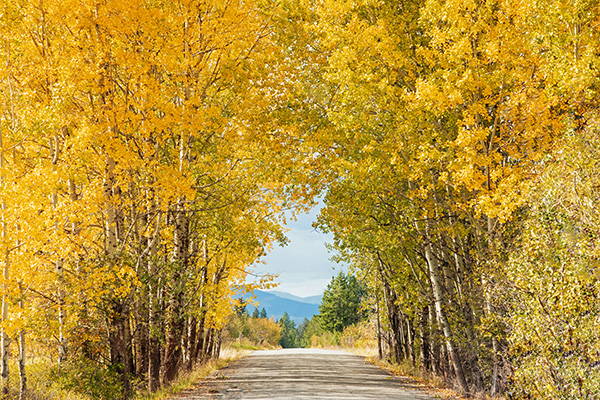
The road looks wet, but nothing about it seems especially difficult. Then you reach a leaf-covered turn, and the car doesn't respond quite the way it did on the clear pavement.
Wet leaves change the surface beneath the tires. They also hide details you'd normally use to judge the road, including standing water, painted markings, and small defects. Treat a covered patch as a reason to slow down before you reach it, especially if you need to turn or stop.
Why Wet Leaves Reduce Tire Grip
A tire needs contact with the road to steer and brake. A layer of wet leaves puts another material between the tread and pavement. As vehicles crush and move the leaves, the surface changes again. The exact grip varies with the amount of cover, moisture, temperature, and tire condition. A single comparison such as saying every wet leaf patch is identical to ice oversimplifies it. The driver doesn't need that comparison to act: slow before the patch and leave room for a less predictable response.
Brake Before the Leaf-Covered Turn
Complete most of your slowing while traveling straight, then steer smoothly through the turn. Braking hard and turning sharply at once asks the tires to share their limited grip between two jobs.
If you arrive too quickly, avoid adding a sudden correction just because the car feels unsettled. Look along the path you want to follow and use controlled inputs. Follow your vehicle's handling instructions, and remember that stability control still works through the grip available at the tires. It won't create clean pavement beneath a thick layer of leaves.
Leaf Cover Changes How Soon You Should Slow
Intersections, shaded bends, and approaches to crossings need extra room. Those are places where a driver might brake suddenly or turn while the tire is already on the covered surface.
Look farther ahead and ease off early when you see the cover. Around Hanover Park, leaves sometimes collect along curbs and then spread into a travel lane after rain or wind. A familiar turn needs a fresh look instead of yesterday's speed carried into different conditions.
Wet Leaves Hide More Than the Pavement
The layer sometimes covers a pothole, broken edge, or water deep enough to change the car's response. Lane markings and crossing lines also become harder to see. More space gives you time to recognize where the road actually goes.
Don't steer abruptly around every visible pile without checking adjacent traffic. An avoidance move can sometimes create a greater hazard. Choose a slower line within the lane and keep scanning for pedestrians, cyclists, and vehicles entering from behind parked cars.
Tire Checks Before Fall Roads Get Slick
Review these points before relying on the tires in wet conditions:
- Cold inflation pressure set from the vehicle instructions
- Tread measured across the full tire width
- Uneven inner-edge wear
- Cuts, bulges, or exposed structural material
- Repeated pressure loss
- Tire age and the manufacturer's replacement guidance
- A mismatch within a set that has matching requirements
Tread helps move water, but tire condition involves more than the grooves you can see from outside the car. We'd inspect the inside shoulder too. A tire that looks healthy beside the wheel arch sometimes has much less material on its hidden edge.
Following Distance on Covered Roads
Leave enough space to slow gradually when the vehicle ahead brakes. Count the gap using a fixed roadside point, then increase it as grip or visibility worsens. The right interval changes with conditions; don't treat a dry-road habit as the limit for a wet leaf-covered street.
If another driver enters the space, rebuild it smoothly. Tailgating to defend the gap removes the room you just created. Larger vehicles ahead can hide the leaf patch until you're already close, so stay far enough back to see beyond them.
Leaves Around Wipers and Air Intakes
Road grip isn't the only issue. Leaves collecting beneath the windshield sometimes block drains or the outside-air intake. Water then accumulates where it should flow away, while restricted airflow makes clearing fog harder.
Remove loose debris while the car is parked and cool, following the vehicle's instructions. Avoid forcing objects into drains or damaging trim. If water appears inside the cabin or the defroster airflow has weakened, we'd check the drain path, filter, and blower area according to the symptom.
When a Slide or Impact Changes the Car's Handling
A curb hit or deep pothole sometimes leaves a tire, wheel, or steering part damaged. A new pull, clunk, vibration, or crooked steering wheel after that event needs a check.
Tell us what happened and where you feel the change. We'll inspect the tire and wheel at the impact site first, then check steering and suspension movement before deciding whether alignment is the next step. Adjusting wheel angles won't repair a bent or loose part.
Tire and Brake Service at Kamphaus Auto Care
Kamphaus Auto Care in Hanover Park, IL, can inspect uneven tire wear, pressure loss, or braking concerns before wet fall roads demand more from your car. Mention any recent slide, curb hit, or change in handling.
Contact Kamphaus Auto Care to arrange a tire and brake inspection.